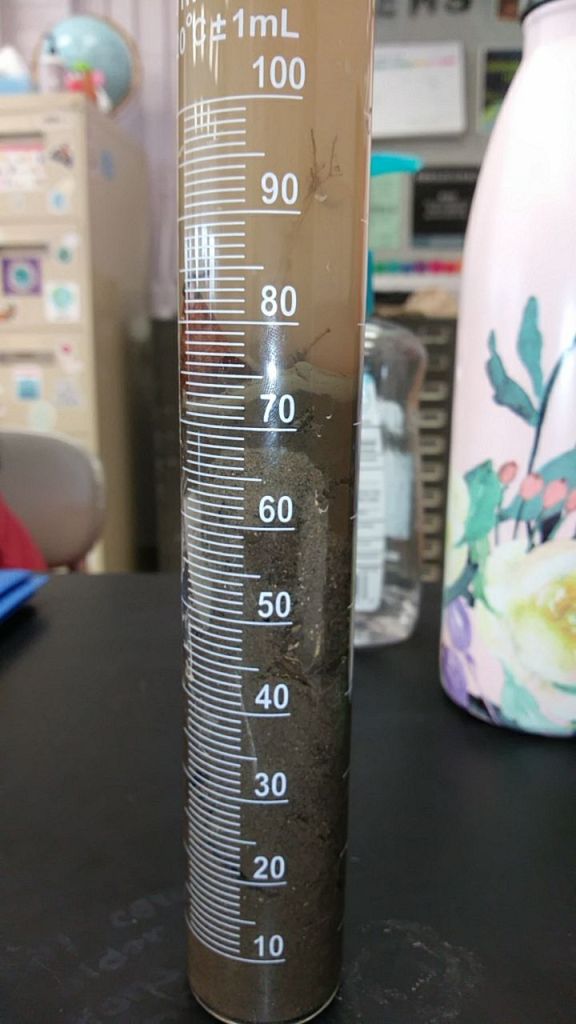
After placing our soil sample in a 100mL graduated cylinder mixed with water for about 24 hours we came to the conclusion that the type of soil we have is sand. We measured the height of each layer and the total height of the sample and obtained a 91% of sand, 4.5% of silt, and 4.5% of clay. This method compares to the qualitative method by helping us evenly divide the types of soils we have in our sample, which differentiates to other samples. Many of the soil texture results of other groups indicated that their samples were mainly silt loam. Many of the areas that had outside impacts such as salt used during the winter months landing on the grass and going into the soil. Also the use of pesticides were major areas in which loam was mainly found. We believe that the soils are the way that they are due to outside factors such as human impacts that may have changed the formations of the soil. Grass was the only plant growing naturally in the area where we took our samples from. Yes, plants prefer soil that has more sandy loam because loam has an even mixture of sand, silt, and clay.
- Comment
- Reblog
-
Subscribe
Subscribed
Already have a WordPress.com account? Log in now.
 Soil Analysis and Agriculture Remediation